Aeron Stool


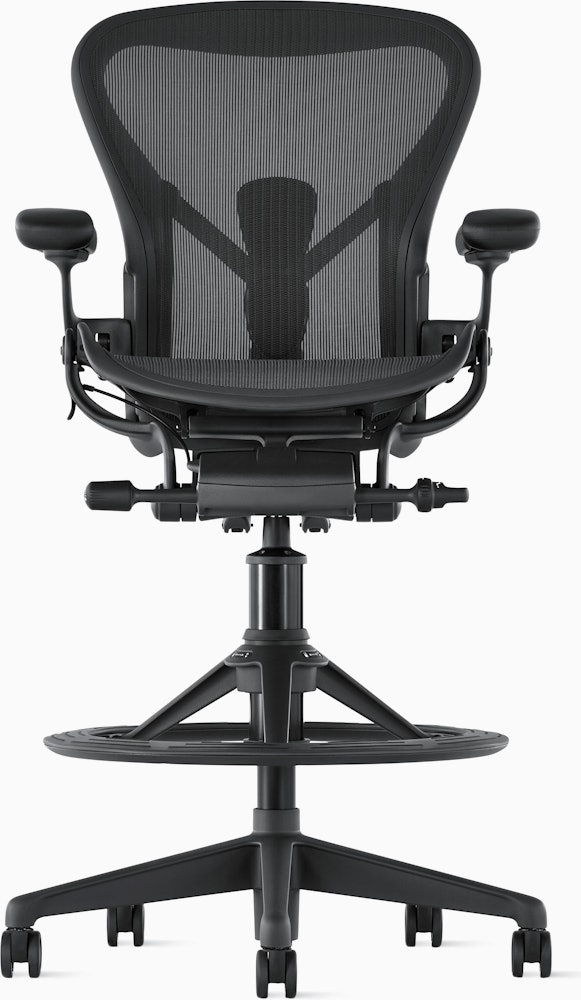


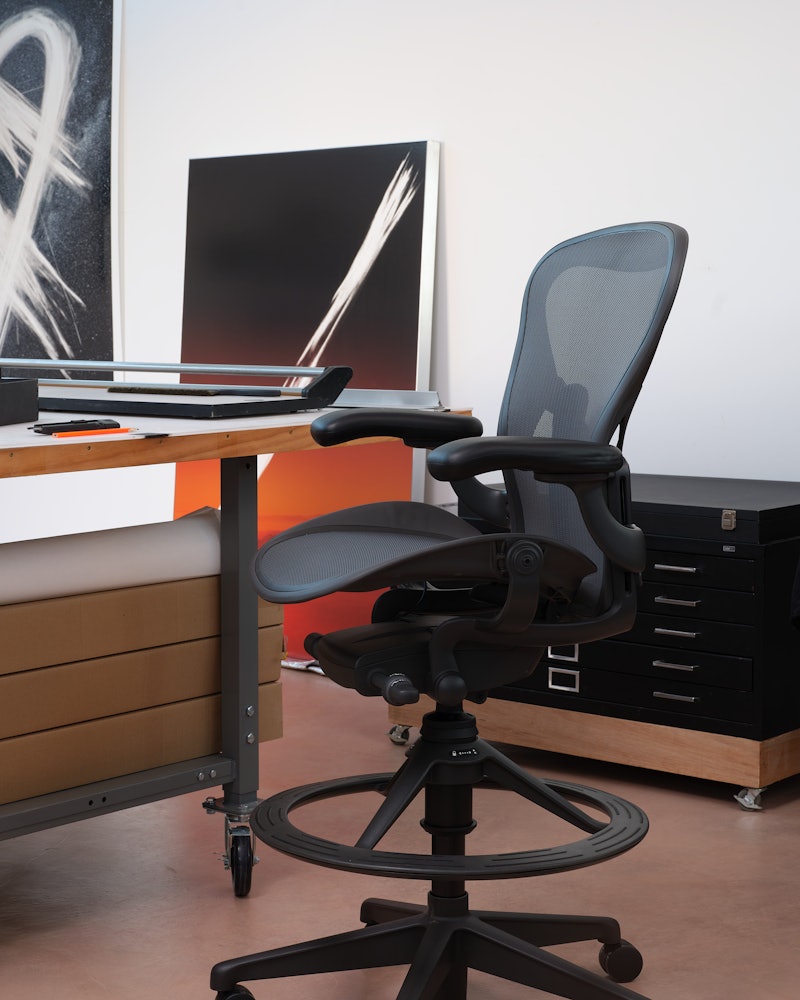


Aeron Stool

Easy returns
Not satisfied? Return items within 30 days. Learn more

Authenticity guaranteed
Original design from the source.

Design Services
Need help designing your space? Learn more about our complimentary interior design services
Warranty
12-year warranty
Terms and conditions apply. Learn more

Aeron Stool
Details
- The perfect balance of ergonomics and comfort.
- You’ll sit naturally while also experiencing superior back support.
- Breathable suspension keeps you cool and comfortable.
- Height-adjustable footrest moves with the seat for comfortable extended sitting.
- Fully adjustable arms allow for height and angle changes.
BIFMA Level 3 certified and has also received the Indoor Advantage Gold certification, SCS Global Services' highest level of indoor air quality performance for furniture. The certification ensures that furniture products support a healthy indoor environment by meeting strict chemical emission limits for volatile organic compounds (VOCs).
- Brand
- Herman Miller
- Collection
- Aeron Collection
- General Dimensions
-
- 49¼" H 27" W 17" D
- Product Weight
- 50 lbs
- Assembly
- Comes fully assembled
- Warranty
-
12-year warranty
Terms and conditions apply. Learn more
- Lifestyle
-
- Eco-friendly
Counter Height
- Height Min (in): 45⅝
- Height (in): 49¼
- Width (in): 27
- Depth (in): 17
- Seat Height Min (in): 24¾
- Seat Height (in): 29¼
- Seat Width (in): 20¼
- Seat Depth (in): 17
- Weight (lbs): 50
- Weight Capacity (lbs): 350
Bar Height
- Height Min (in): 49
- Height (in): 54½
- Width (in): 27
- Depth (in): 17
- Seat Height Min (in): 28
- Seat Height (in): 34¼
- Seat Width (in): 20¼
- Seat Depth (in): 17
- Weight (lbs): 70
- Weight Capacity (lbs): 300
- Matte, polished, or powder-coated die-cast aluminum or polymer chassis and base
- 8Z Pellicle elastomeric suspension seat and backrest
- Harmonic™ 2 Tilt mechanism
- Adjustable back with PostureFit SL™ hardware or lumbar support
- Standard or leather-upholstered polyurethane foam arm pads
- Standard 2.5-inch carpet casters
- Notification of Filling Contents

Don Chadwick
Even though Don Chadwick has achieved acclaim for his work on some of the world’s most iconic furniture, he’s still at it. He’s still in Southern California. He’s still getting his hands dirty. He’s still refining his process and sharpening his eye for design. He’s still having fun.
More on Don Chadwick
Bill Stumpf
Bill Stumpf once said, “I work best when I’m pushed to the edge. When I’m at the point where my pride is subdued, where I’m innocent again. Herman Miller knows how to push me that way, mainly because the company still believes—years after D.J. De Pree first told me—that good design isn’t just good business, it’s a moral obligation. Now that's pressure.”
More on Bill StumpfWith regular care and maintenance, your Herman Miller product will provide many years of superior performance and satisfaction. To maintain quality, please follow the cleaning procedures outlined here.
The instructions for the care and maintenance of Herman Miller products are provided to you as a service. No warranty is implied since results may vary.
Aeron Care and Maintenance Guide
Design Details

01 PostureFit SL technology flexes to support the lumbar and base of the spine, encouraging a more active posture while reducing muscle fatigue.

02 8Z Pellicle suspension allows body heat to pass through the seat and backrest.

03 Eight zones of varying tension within the back and seat relieve pressure points and nest the body.

04 Harmonic™ 2 Tilt offers balanced motion through a range of postures, with even more customizability thanks to tilt limiter and forward tilt adjustments.

05 The footrest is three times wider than standard platforms to provide more support and reduce pressure on your feet.

06 Composed of recycled materials, Aeron helps divert plastic waste from the ocean.