Eames Soft Pad Side Chair - Work Chairs - Seating - Herman Miller Official Store
Divider
Curve

Click on image to zoom

Curve
Curve

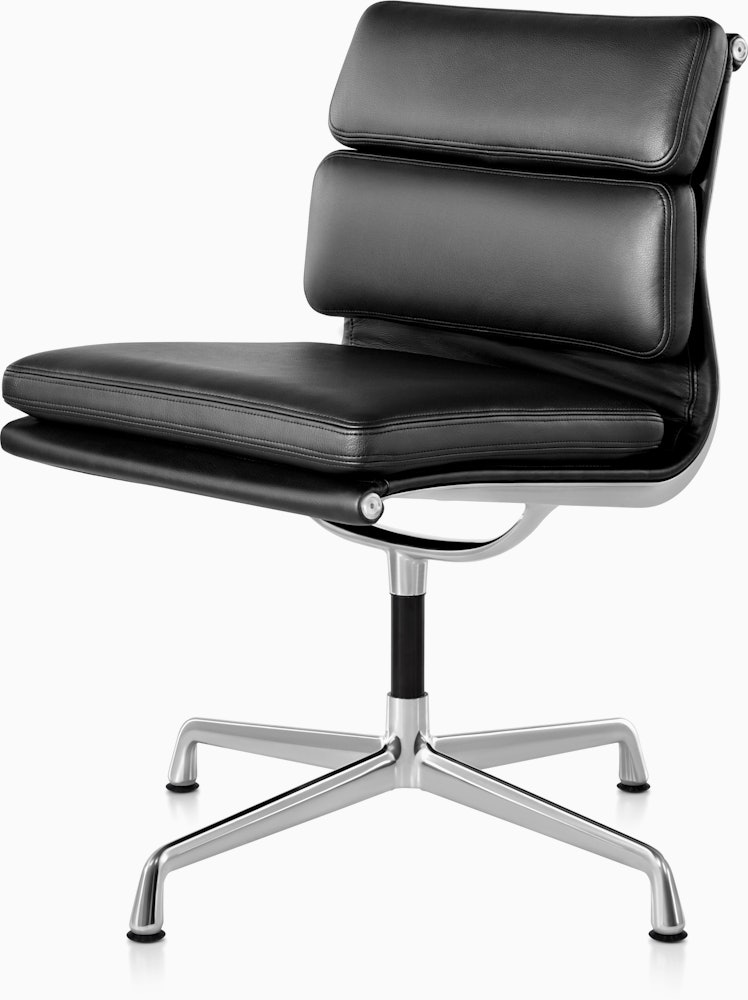
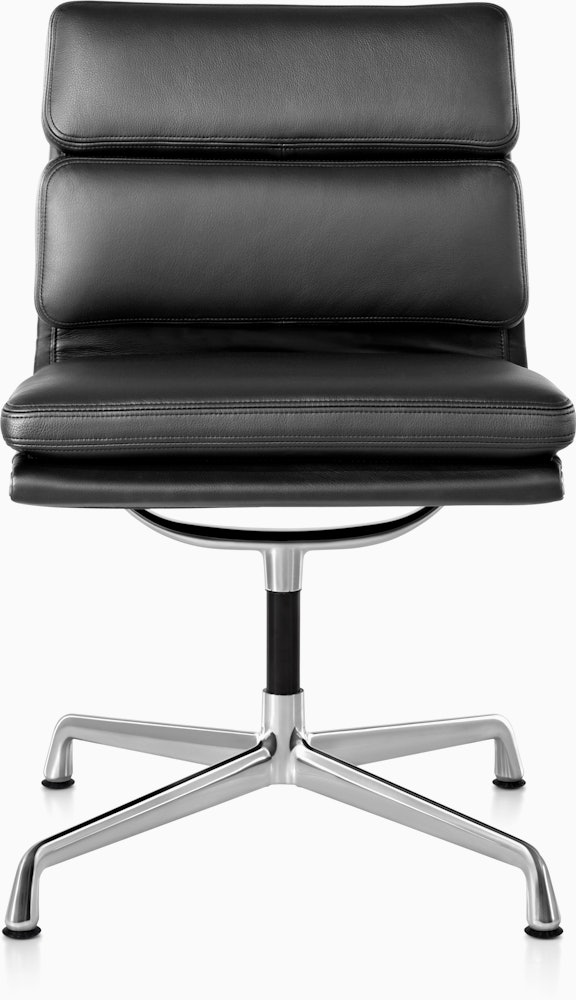
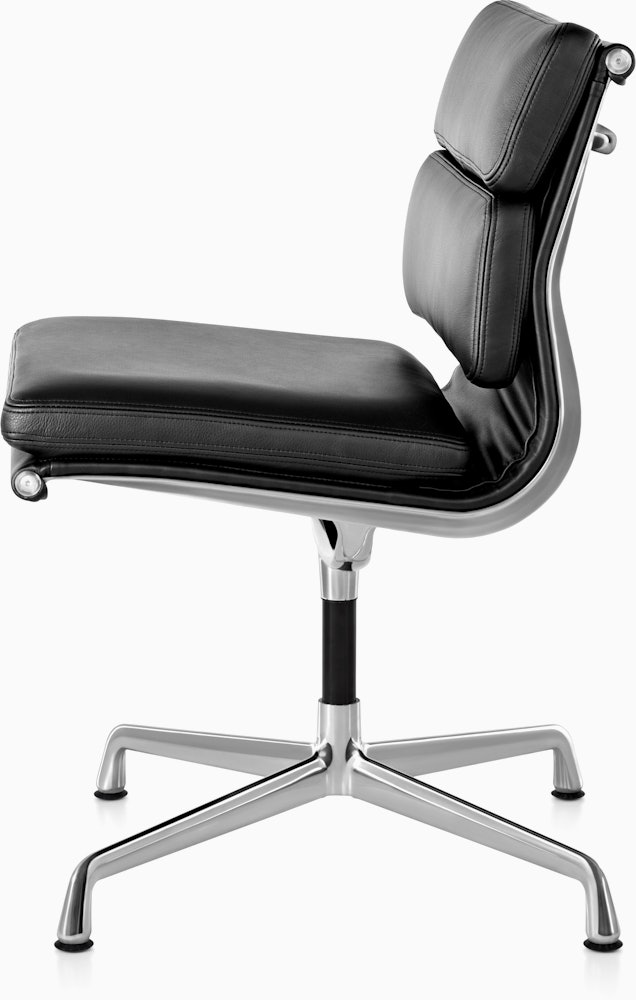
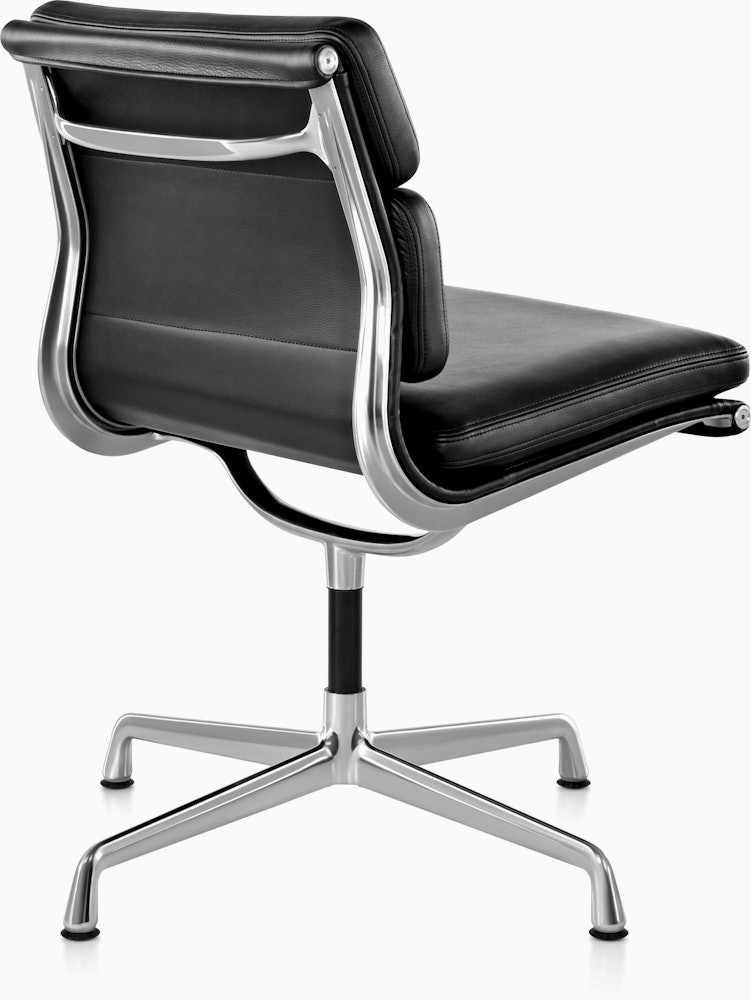
Eames Soft Pad Side Chair

Designers: Charles and Ray Eames
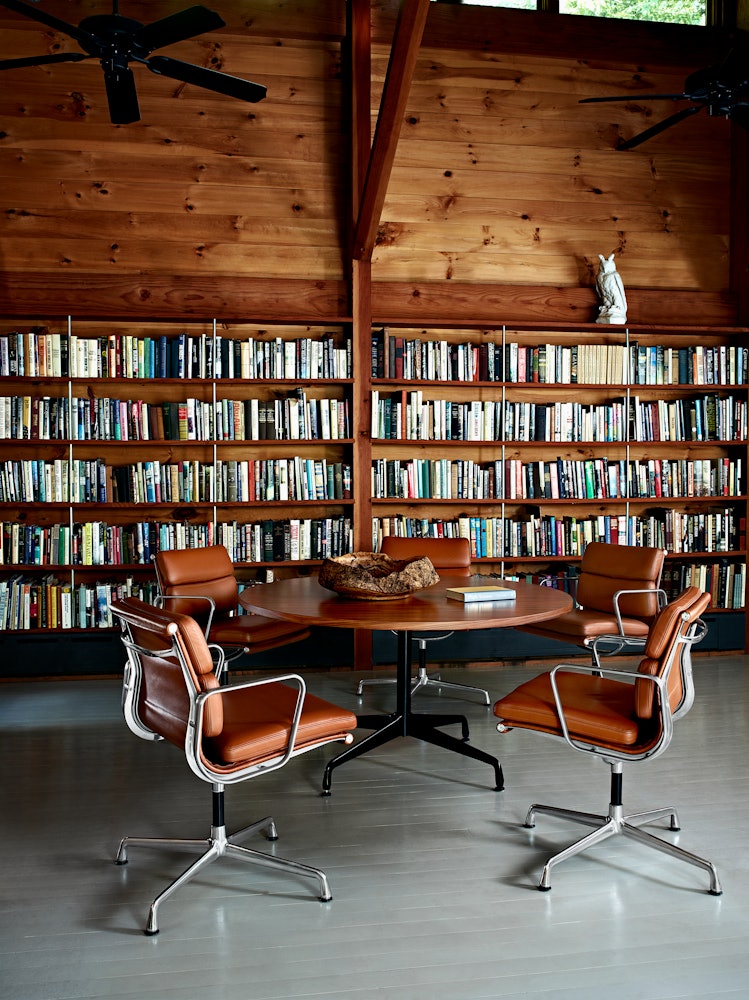
A cushy cousin of the Aluminum Group, Soft Pad is a luxurious chair that bears the unmistakable Eames stamp. The side chair is a low-back, armless chair that works as well in your dining area at home as it does in the office. Now available with new material and finish options with a 4-star base.

View Full Description
Curve
Configure Your Eames Soft Pad Side Chair
Curve
Eames Soft Pad Side Chair

Timeless Elegance

It's a trick only Charles and Ray Eames could pull off: Chairs designed in 1958 as outdoor seating still look both classic and contemporary in 21st century interiors.

These Eames chairs are equipped with an innovative suspension that creates a firm, flexible "sitting pocket." It conforms subtly to your body's shape and maintains your comfort.

With an aluminum frame and base, the chair is strong yet lightweight and easy to move. Earth-friendly, too: made of 67 percent recycled materials and 90 percent recyclable at the end of its useful life.

Curve
Charles and Ray Eames

A major technical achievement.

Charles and Ray Eames View Design Story
Curve
  • Earth-friendly Construction

    Earth-friendly Construction

    Soft Pad chairs are made of 67 percent recycled materials and are 90 percent recyclable at the end of their useful life.

  • Innovative Comfort Suspension

    Innovative Comfort Suspension

    Charles and Ray Eames were always concerned about the comfort of their furniture. On the Aluminum Group chairs, they stretched a continuous piece of seat-back upholstery tautly between the aluminum side ribs to make a flexible pocket that provides support as you sit.

  • Easy Swivel

    Easy Swivel

    Chairs have a 5-star base with swivel mechanism and glides that work on both hardwood floors and carpets.

  • Choose your Materials

    Choose your Materials

    The side chair has two 2-inch-thick upholstered foam cushions on the back and one on the seat. You can have the chair in leather or in one of many fabric options.

A major technical
achievement.

Eames chair prototypes

Outdoor Seating Comes In

An Industrialist Who Loved Modern Design

Industrialist J. Irwin Miller was born in the small town of Columbus, Indiana, in 1909. A civic-minded man, he set up the Cummins Foundation in 1954 and offered his home town a deal: The Foundation would pay architect fees for new public buildings and would choose the architects. As a result, this town of about 40,000 has buildings by the giants of mid-century modern design—Eero and Eliel Saarinen, I.M. Pei, Cesar Pelli, Kevin Roche, and Richard Meier, among others. In 1991, the American Institute of Architects declared the small town the sixth most important in the country in terms of architecture.

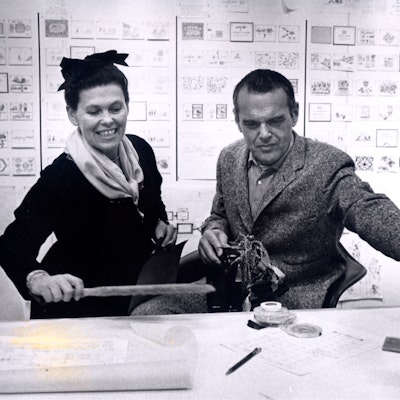
Charles and Ray Eames working on prototype Eames chair

A Step Up to Luxury

We began making the Aluminum Group chairs in 1958. In 1969, Charles and Ray extended the design by adding generously plush cushions, creating the Soft Pad line. The chairs' simple lines, innovative use of materials, and suspension comfort have kept the Aluminum Group and Soft Pad chairs among the most popular seating choices for offices and homes.

Miller home Eames Soft Pad Management Chair

A Challenge to the Eames Team

Among the buildings Eero Saarinen designed in Columbus was Miller's home. Saarinen wanted high-quality seating for outdoor use and asked Charles and Ray Eames to develop it. They constructed their chairs with cast aluminum and a seat frame that would support a stretched synthetic mesh. The seat-back suspension was a major technical achievement and a departure from the concept of the chair as a solid shell.


Aluminum chairs in developmentAluminum chairs in development

Their design represented a departure from
the concept of the chair as a solid shell.


Archival photos courtesy of Eames Office LLC


General Dimensions

  • H:33.75"
  • W:23"
  • D:16.5"
Eames Soft Pad Side Chair

Shipping Information

Standard Shipping Method:
LTL Carrier
Packaging Type:
Box
Packaging Dimensions:
27" x 26" x 35"
Package Weight:
35 lbs.
Assembly Required:
No
White Glove Service Recommended:
No

Warranty

Warranty:
12-year, 3-shift
View PDF

Care & Maintenance

With regular care and maintenance, your Herman Miller product will provide many years of superior performance and satisfaction. To maintain quality, please follow the cleaning procedures outlined here.

The instructions for the care and maintenance of Herman Miller products are provided to you as a service. No warranty is implied since results may vary.

Divider

Polished Aluminum

For normal cleaning, apply a pre-softened paste wax to polished aluminum components following the manufacturer's instructions. In humid atmospheres near salt water, apply the wax once a month. In other areas, apply wax every three months to maintain the appearance of the aluminum.

Fabric

For normal cleaning, vacuum upholstery fabric using an upholstery attachment. If further cleaning is needed, dry-clean or spot clean fabric with solvent cleaner.

Do not brush fabric or use a vacuum attachment with a rotary brush. Brushing may permanently damage the nap or change the character of the fabric.

Do not apply water or any liquid solution. Wetting the fabric with any liquid solution may result in permanent damage.

Vinyl Upholstery

For normal cleaning, wash vinyl upholstery with a soft cloth or soft-bristled brush lathered with mild, nonabrasive soap and lukewarm water. Before the surface dries, wipe with a clean, dry cloth to remove any residue. This procedure may be repeated to remove stubborn dirt or stains.

Ink spots can sometimes be removed by washing with soap and water followed by isopropyl alcohol.

Do not use any cleaning method that is not listed above, as other methods may attack the vinyl and cause eventual degradation.

Leather

For normal cleaning, vacuum or dust frequently with a clean, dry cloth. If leather is soiled, it can be wiped with a damp soft cloth and a lather of any mild soap and a minimum amount of lukewarm water. Do not spot clean leather; clean the entire surface. Wipe clean with a damp cloth and dry with a clean, soft cloth.

For spots and spills, wipe excess liquid immediately with a clean cloth or sponge; let the leather air dry. If the spot is still visible, further cleaning may be necessary. Sponge the entire surface—seat, back, or chair arm—with clean, lukewarm water. Let the leather air dry; never use a hair dryer or other heat source to dry leather.

For stubborn spots and stains, apply a mild, nonabrasive soap solution with a clean, wet sponge. Rinse well and let air dry. For butter, oil, or grease, wipe the leather with a clean, dry cloth and let the remainder of the oil dissipate into the leather. Do not apply water or try to wash a grease spot.

Do not use saddle soap, cleaning solvents, oils, furniture polishes, varnishes, abrasive cleaners, detergents, or ammonia on leather; they will ruin the finish, causing it to become sticky and cracked.

Curve